Classic Spritz Cookies
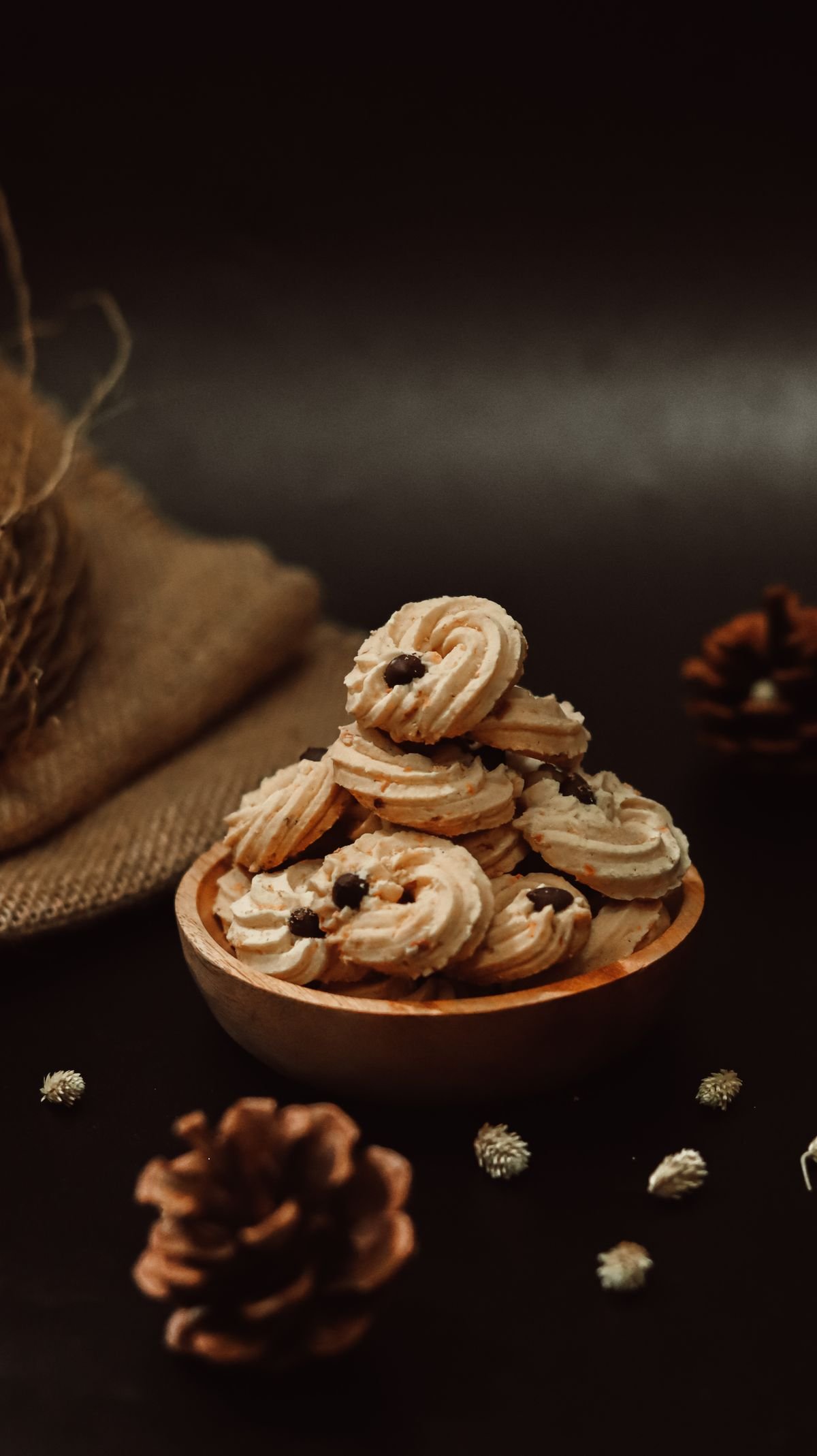
Classic spritz cookies are the delicate, buttery cookies that have been pressed into pretty shapes in home kitchens for generations. They are light and crisp at the edges, tender in the middle, and made with a simple dough of butter, sugar, egg, vanilla, and flour, pressed through a cookie press into rosettes, wreaths, stars, and trees. Classic spritz cookies taste of pure butter and vanilla, and they look beautiful on a cookie tray without any frosting at all, although a little coloured sugar or a dip in chocolate makes them even prettier.
What makes spritz cookies special is their texture. They are not soft and chewy like a drop cookie, and they are not hard like a biscuit. They are crisp and melt-in-the-mouth at the same time, because the dough is pressed thin and baked quickly. They also keep well, travel well, and freeze well, which is why they have been a holiday favourite for so long. This version needs no chilling, uses one bowl, and the whole batch is ready in about thirty-five minutes, including baking time.
Spritz cookies belong to the same family as other butter cookies on this site. If you like them, you will also enjoy our Easy Butter Shortbread Cookies, which are richer and crumblier, and our Raspberry Jam Thumbprint Cookies, which pair a buttery base with a bright jam centre. Classic spritz cookies are the lightest of the three, and the cookie press makes them the most fun to bake, especially with children.
In this guide you will find the full ingredient list, step-by-step instructions for using a cookie press, tips for getting crisp shapes that hold, variations for every season, storage advice, and answers to the questions bakers ask most often. Read the press tips before you start, because the dough must be the right temperature and the tray must be ungreased, and those two details make all the difference.
Prep Time: 20 minutes | Cook Time: 10 minutes | Total Time: 35 minutes | Servings: 36 cookies
Ingredients
Classic spritz cookies need very few ingredients, and each one has a job. The butter must be real butter, softened but not melted, because it gives the flavour and the tender texture. The sugar must be fine, so it dissolves into the butter and does not make the cookies gritty. Use one whole egg plus one yolk for richness, and use pure vanilla extract rather than imitation, because the vanilla is the main flavour. The flour should be all-purpose, measured lightly, and the dough should be soft enough to press but firm enough to hold its shape.
- 1 cup unsalted butter, softened
- 3/4 cup granulated sugar
- 1 large egg, at room temperature
- 1 large egg yolk, at room temperature
- 2 teaspoons vanilla extract
- 1/2 teaspoon almond extract
- 2 and 1/4 cups all-purpose flour
- 1/4 teaspoon fine sea salt
- Coloured sugar, sprinkles, or candied cherries, for decorating
How to Make Classic Spritz Cookies
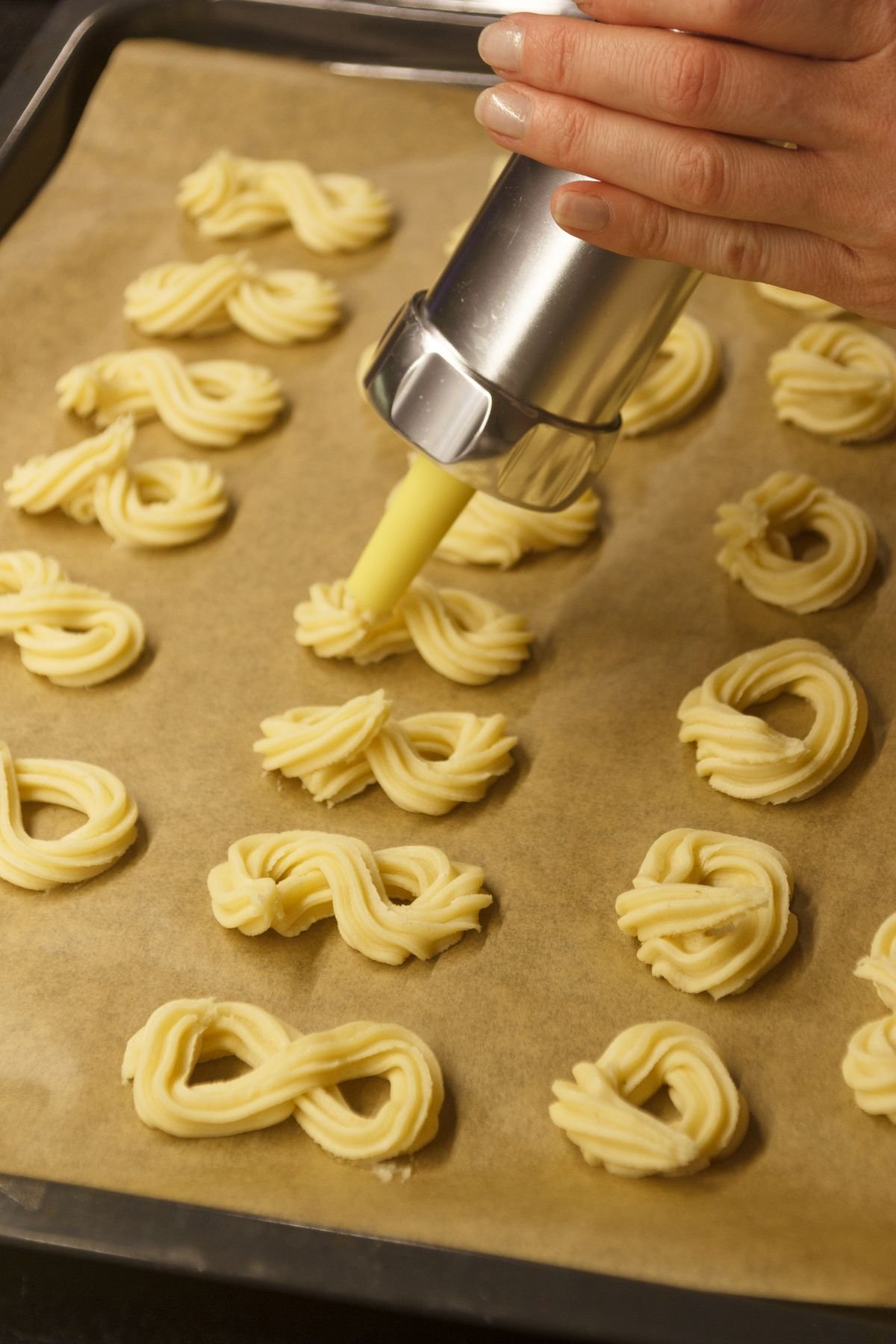
The secret to classic spritz cookies is the cookie press. The dough must be soft enough to go through the press easily, and the baking tray must be clean and ungreased, so the pressed shapes grip the tray and stay put. Do not use parchment paper for spritz cookies, because the shapes slide on the paper and lose their detail. Work with small amounts of dough at a time, and keep the rest covered so it does not dry out.
- Preheat the oven to 375°F (190°C). Do not grease or line the baking sheets.
- Beat the softened butter and sugar together for two to three minutes until pale, light, and fluffy.
- Add the egg and the egg yolk, beating well after each, then beat in the vanilla extract and the almond extract.
- Add the flour and salt in two parts, mixing on low speed just until a soft dough forms. Do not overmix.
- Fill the cookie press with the dough, choosing the shape plate you want, and test one cookie on the tray to check the shape.
- Press the cookies onto the ungreased baking sheets, holding the press flat against the tray and lifting it straight up. Leave one inch between cookies.
- Decorate with coloured sugar or sprinkles before baking, if you like, and bake for eight to ten minutes, until the edges are just turning golden. Cool on the tray for two minutes, then move to a wire rack.
Tips for the Best Classic Spritz Cookies
The most important tip for classic spritz cookies is the dough temperature. The butter must be soft enough to press, but the dough must not be warm or greasy. If the dough is too cold, it will not go through the press and the shapes will break. If it is too warm, the shapes will slump and lose their detail. A good test is to press one cookie: it should come out cleanly, hold its shape, and look crisp. If it does not, let the dough sit at room temperature for five minutes and try again.
Use a clean, ungreased baking sheet, and do not use parchment paper. The pressed dough needs to grip the bare metal so the shape stays on the tray when you lift the press away. If your tray is non-stick, the cookies may not stick, so use a plain aluminium tray if you have one. Keep the press flat against the tray, squeeze once, and lift it straight up without twisting. Twisting blurs the shape.
Measure the flour lightly and do not overmix the dough. Overmixed dough is tough and springy, and it will not press cleanly. Mix just until the flour disappears, then stop. If the dough feels too soft to hold a shape, add one tablespoon of flour at a time until it firms up. If it feels too stiff, work in one teaspoon of milk. Bake the cookies just until the edges turn pale gold, because they continue to crisp as they cool and they burn quickly after that point.
Variations to Try
For a chocolate version, replace a quarter cup of the flour with unsweetened cocoa powder and add half a teaspoon of vanilla. The dough will be a little softer, so chill it for ten minutes before pressing. For a lemon version, add the finely grated zest of one lemon and replace the almond extract with lemon extract. For a holiday version, divide the dough into two bowls and tint one red and one green, then press wreaths and trees and decorate them with coloured sugar.
For a filled version, press the cookies as usual, bake them, and sandwich two cooled cookies together with a thin layer of jam, chocolate ganache, or lemon curd. The jam adds a bright flavour that cuts through the butter, and the sandwich looks lovely on a tray. For a dipped version, melt dark or white chocolate, dip half of each cooled cookie, and set them on parchment until the chocolate firms up. A sprinkle of chopped pistachios on the wet chocolate adds colour and crunch.
You can also change the shape for the season: hearts for Valentine’s Day, flowers for spring, pumpkins for autumn, and snowflakes for winter. The same dough works for all of them, so one recipe covers the whole year. If you do not own a cookie press, you can pipe the dough through a large star tip instead, or roll it into small balls and flatten them with the bottom of a glass. The shapes will be simpler, but the flavour will be just as good.
How to Store Classic Spritz Cookies
Store cooled classic spritz cookies in an airtight container at room temperature for up to two weeks. They keep their crisp texture well, especially if you keep the container closed and away from humidity. Layer them with parchment paper so the decorated tops do not stick together, and do not store soft cookies in the same container, because the spritz cookies will absorb moisture and lose their snap.
For longer storage, freeze the baked cookies in a single layer on a tray until firm, then move them to a freezer bag. They keep for up to three months and thaw in about fifteen minutes at room temperature. The unbaked dough also freezes well: shape it into a log, wrap it tightly, and thaw it in the fridge overnight before pressing. If you are making cookies for a holiday gift box, bake them a few days ahead and store them in a tin, because they actually taste better on the second day, once the butter flavour has settled.
FAQs
Do I need a cookie press to make spritz cookies?
A cookie press gives the classic shapes, but you can still make spritz cookies without one. Pipe the dough through a large star tip to make rosettes, or roll it into small balls and flatten them gently with the bottom of a glass dipped in sugar. The flavour and texture will be the same, even if the shapes are simpler.
Why will my spritz cookies not stick to the tray?
Spritz cookies need a bare, ungreased tray to grip. Parchment paper, silicone mats, and non-stick trays are all too slippery, so the shapes slide and lose their detail. Use a plain aluminium baking sheet, press the cookie flat against the metal, and lift the press straight up. If the dough is too warm, it will also refuse to stick, so let it firm up for a few minutes.
Can I chill spritz cookie dough?
Chilling is not recommended for spritz dough, because cold dough will not go through the press. If you make the dough ahead, store it at room temperature for up to a few hours, or refrigerate it and let it warm up for thirty minutes before pressing. The dough should feel soft and pliable, like play dough, when you load the press.
How do I colour spritz cookie dough?
Add gel food colouring a little at a time while you beat the butter and sugar, so the colour is even before you add the flour. Gel colouring works better than liquid, because it does not change the dough texture. For a natural colour, use a little beet powder for pink or matcha powder for green, although the colours will be softer than artificial ones.
Can I freeze spritz cookies?
Yes, spritz cookies freeze very well because they are crisp and dry. Freeze the baked, undecorated cookies in a single layer, then move them to a freezer bag for up to three months. Thaw them at room temperature for fifteen minutes. If you want to decorate them, do it after thawing, so the sprinkles and sugar stay bright and the chocolate does not bloom.
Conclusion
Classic spritz cookies are a reminder that the prettiest cookies are often the simplest. Butter, sugar, vanilla, and a cookie press are all you need to make delicate, crisp cookies that look like they came from a bakery and taste like home. Bake a batch for the holidays, for a gift box, or just for an afternoon with a cup of tea, and enjoy the quiet pleasure of pressing each perfect shape. Once you have made them, you will understand why this recipe has been loved for generations.